Interview by Paul Sullivan
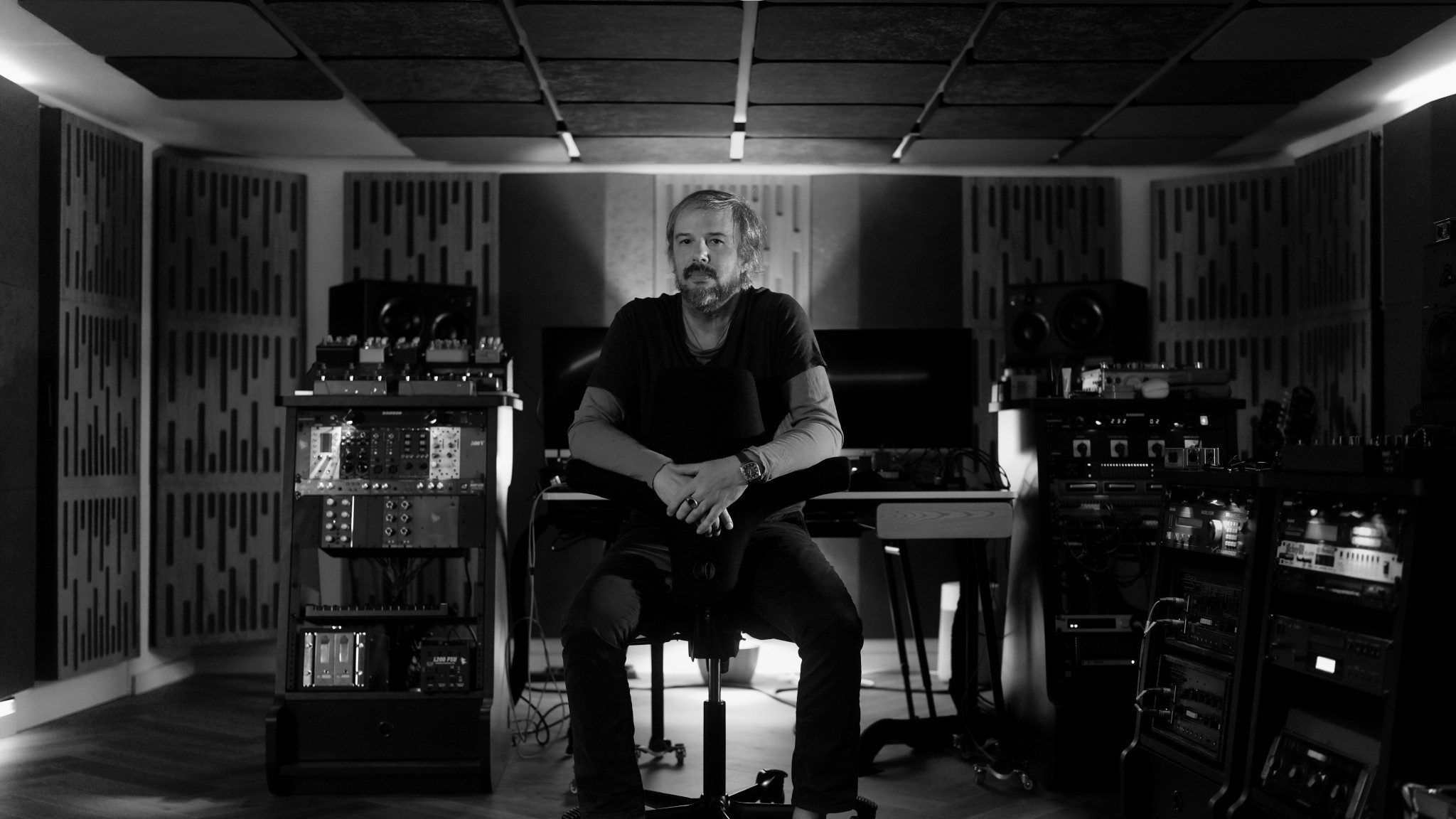
Adam Wiltzie—American musician, co-founder of seminal ambient duo Stars of the Lid and renowned sound engineer— first met Icelandic composer Jóhann Jóhannsson while he was working the merch stall after a Stars of the Lid show in Prague. They quickly became friends and collaborators, with Wiltzie helping Jóhann organise a U.S. tour in 2009, and eventually sharing management in the shape of Tim Husom from Redbird Music.
Along the way, the pair discovered that their working methods, musical instincts and even their approach to archiving recordings were remarkably similar. It also transpired they had been born in the same month and year—in fact, just two days apart. “It was often like being with a mirror image of myself,” recalls Wiltzie from his home in Belgium. “Even though he had grown up in Reykjavik and I’m from New York, our lives had so many parallels. At times it felt like we were almost the same person.”
When Jóhannsson passed away in 2018, leaving behind one of the most distinctive bodies of film and contemporary classical music of his generation, the pair had already worked together on several major projects, most notably film scores such as James Marsh’s The Theory of Everything and Denis Villeneuve’s Arrival. Wiltzie also worked as sound engineer for Jóhannsson’s live shows and performed drone and electronics for live orchestrations of Jóhannsson’s cinematic suites.
Along the way, the pair created and archived material for their own collaborative project. From around 2016 they began to make recordings, tape loops and improvisations, often storing fragments left over or rejected from other projects, including their film score work. Since both were often on the road touring and performing, a lot of this music was made and exchanged during studio meet–ups and work sessions in Copenhagen, Berlin and Reykjavik. A great deal of it was also exchanged via physical formats sent in the post. “We were both lovers of physical formats,” comments Wiltzie. “The physicality of the recordings and the way we worked was important to us. If he were still alive, we would probably be trading 4K restoration DVDs.”
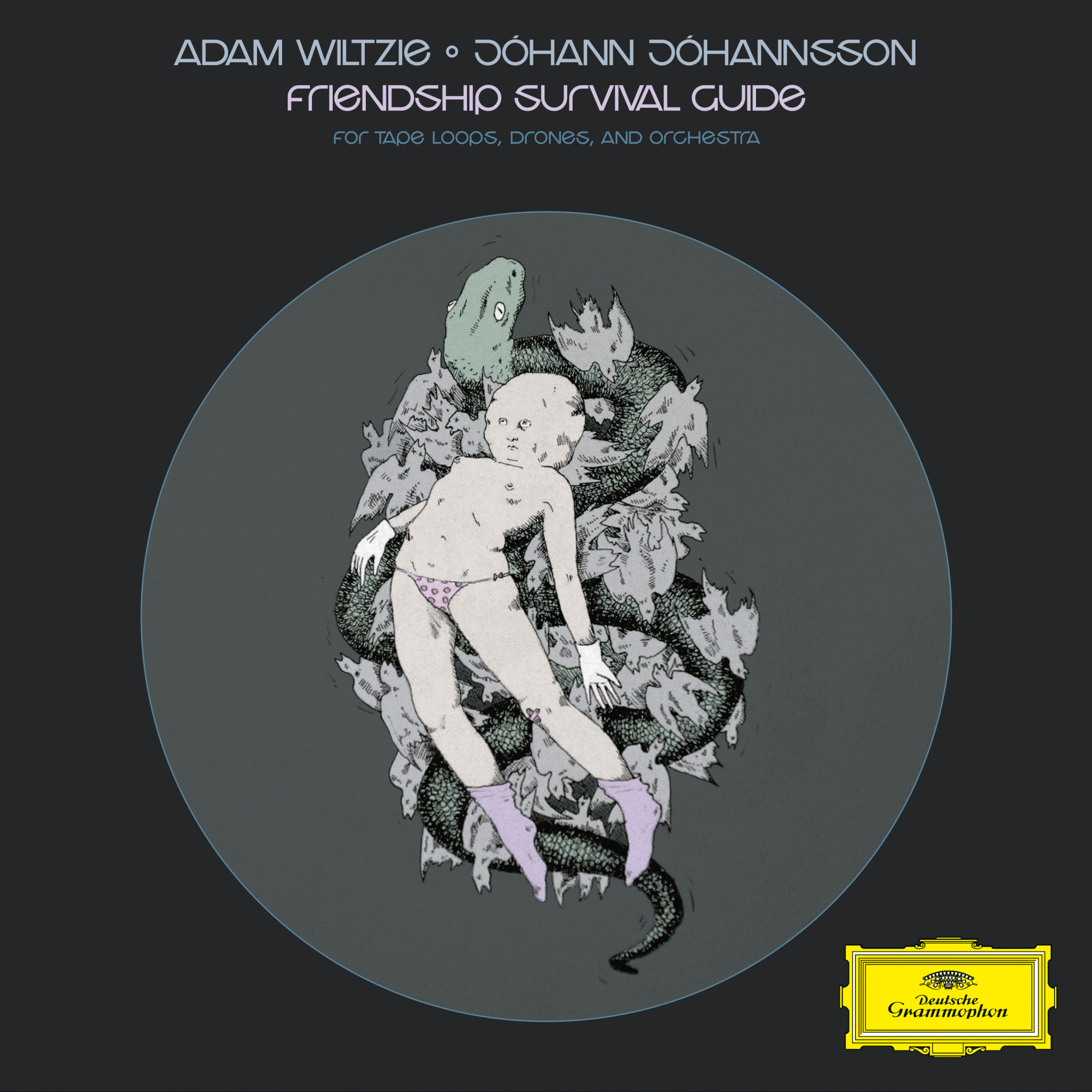
In the last couple of years, Wiltzie made his way back into their shared archive to create Friendship Survival Guide, a ten-track album that beautifully blurs the lines between ambient drone music, processed guitars and strings, and soundtrack work. It’s a perfect synthesis of the music styles the pair are respectively known for. “The idea was to create something that was our own,” explains Wiltzie. “There was no grand blueprint and no certain kind of record in mind. We were just collecting sounds and wanted to make something different to all the commissioned pieces. We wanted our own baby, even if it was made of these fragments and scraps of abandoned scores.”
The project, says Adam, was around halfway complete when Jóhann died. Most of the orchestration was created afterwards and it took some outside help to get it into its final shape. Grammy and Emmy-winning producer and sound engineer Francesco Donadello, who had worked on some of the original tape loops at his Berlin studio, did the mixing and worked more on the loops. Canadian musician Tim Hecker contributed the haunting outro track, “Where You Are Now, Voyager”. And none other than legendary producer and audio engineer Steve Albini recorded some of the guitars and did some reamping.
“I found myself in Chicago, where Albini was based,” explains Adam. “I had met him in the ‘90s and decided on a whim to book some time at his studio. I am so glad I did. He was such a great collaborator, even for these smaller jobs, and a really unique and incredibly patient man.”
The album is accompanied by a three-part film by director Jonas Govaerts, which follows Wiltzie and Belgian actor Jeroen Perceval on a strange nocturnal journey. Wiltzie says he cannot quite explain the narrative himself, but it felt necessary as a way of giving the music a cinematic dimension.
“Some people can’t listen to the music of someone close who has passed away, but for me I wanted to listen to Jóhann’s music more. The music he made in those years was just so incredible and it reminds me of what an amazing sentient being he was, especially when he was creating. We used to joke that he could board a plane and have written a film score by the time he landed. I remember when he created the bass sound in Sicario that became known as “The Beast”. It was such a brutally simple glissando that he created on a Moog and then recreated with six contrabasses. It was so natural and easy for him but it kind of changed film music. Do I wish we could have done more together? Of course. But at least we now have this, and I think it describes our friendship well. I also think he’d be as pleased as punch at how it turned out.”
Friendship Survival Guide is set for release on 18 September 2026. Pre-order and listen now.