Back in 2020, Agnes Obel was preparing to tour her album Myopia when the pandemic hit. She was forced to postpone all the dates and return home, where she decided to use the sudden free time to start work on a new album. She had, in fact, already been sketching out a concept for it, something connected to the theme of technology. But things were to turn out differently…
“When it comes to ideas, I am always reminded of the David Lynch quote about sitting with your fishing rod and waiting and hoping something will catch,”
she laughs during our interview at UMG’s Berlin offices. “So there I was, holding my fishing rod out over different kinds of lakes and oceans, when suddenly I caught a big one: I discovered I was pregnant. Suddenly, technology seemed completely irrelevant. Instead I felt compelled to follow the rabbit down the hole, and decided to use the record to express what was happening while I was experiencing it…”
While it’s true that The Meaning of Flowers is about motherhood at its core, it will come as no surprise to Agnes Obel fans to hear that this initial concept sprawled in several fascinating directions during the making of the album, drawing in all manner of related ideas and sounds - including the pulse-like bass synths that flow gently through the album- to lyrics informed by various literary, poetic, scientific and philosophical works.
One of the most important influences was Italian philosopher Emanuele Coccia, whose writing on plants and metamorphosis opened up new ways for Obel to think about not just birth but life, death and regeneration. Other threads led her to Enheduanna, a Sumerian priestess whose hymns make her the earliest known author whose name has survived; in particular, Obel was struck by Enheduanna’s poems dedicated to Inanna, a Sumerian goddess associated with birth, sex and war.
“I knew I wanted to write about this experience of childbirth,”
she says, “but I wanted to use a less direct and more symbolic language, something like the old Nordic mythology. I never really need help when creating the music but I always do to find the words, so I always feed my brain with poetry and different kinds of imagery. When I discovered Enheduanna, it suddenly felt like a unifying human experience, something that crossed thousands of years. It's so personal but also so universal, about new life forming its own systems and how even a seed in the ground can contain the entire cosmos.”
Obel also discovered Hannah Arendt’s concept of “natality” while reading her classic work, The Human Condition. “Her ideas are so powerful,” enthuses Obel. “She’s not really known for her work in this area but she points out that birth isn’t only something that happens when we are born; that we actually carry the potential to reinvent ourselves and even to be reborn everyday."
"This idea of new beginnings was against these totalitarian regimes of death and destruction that her work is more famous for analysing, but I found it very beautiful to think about the physicality of being born, the fragility, how we are so dependent—not just on our parents but society more broadly, which in a way is also supposed to take care of us.”
"The songs on the album tap sonically and lyrically into these themes in clever and imaginative ways. “Blood So Red”, inspired partly by Enheduanna’s hymns to Inanna, channels the physical intensity of giving birth with dense percussion and angelic vocals; the album's title track, based on a “theremin-flute” synth sound, pizzicatos, violin swells and harp arpeggios all written on piano, captures the sensation of new beginnings in more ethereal form; “Laymelli”, whose original working title was “Metamorphosis”, uses vocal pitch effects and itchy percussion to conjure up images of transformation and evolution.
The process of making the album was itself a kind of exercise in allowing each song to become its own small universe without too much control. “I think the good thing is I didn't really have time to reflect on what I was actually doing,” she smiles. “It’s only now that I'm really starting to think about it. I don't function very well with too much cognition or self awareness. It slows down the machinery.”
As with so much of Obel’s music, The Meaning of Flowers carries an inherent insouciance and a natural, dream-like elegance, although unlike previous albums she enlisted backing singers and additional musicians: Fredrik Kinbom on lap-steel and harmonium, Julian Sartorius on drums and percussion, Charlotte Danhier on cello and John Corban on violin. This gives the album a more 3D feel—a bit like being hugged—which, of course, fits the concept. As does the album’s dedication to her young daughter: “she who has changed me and raised me.”
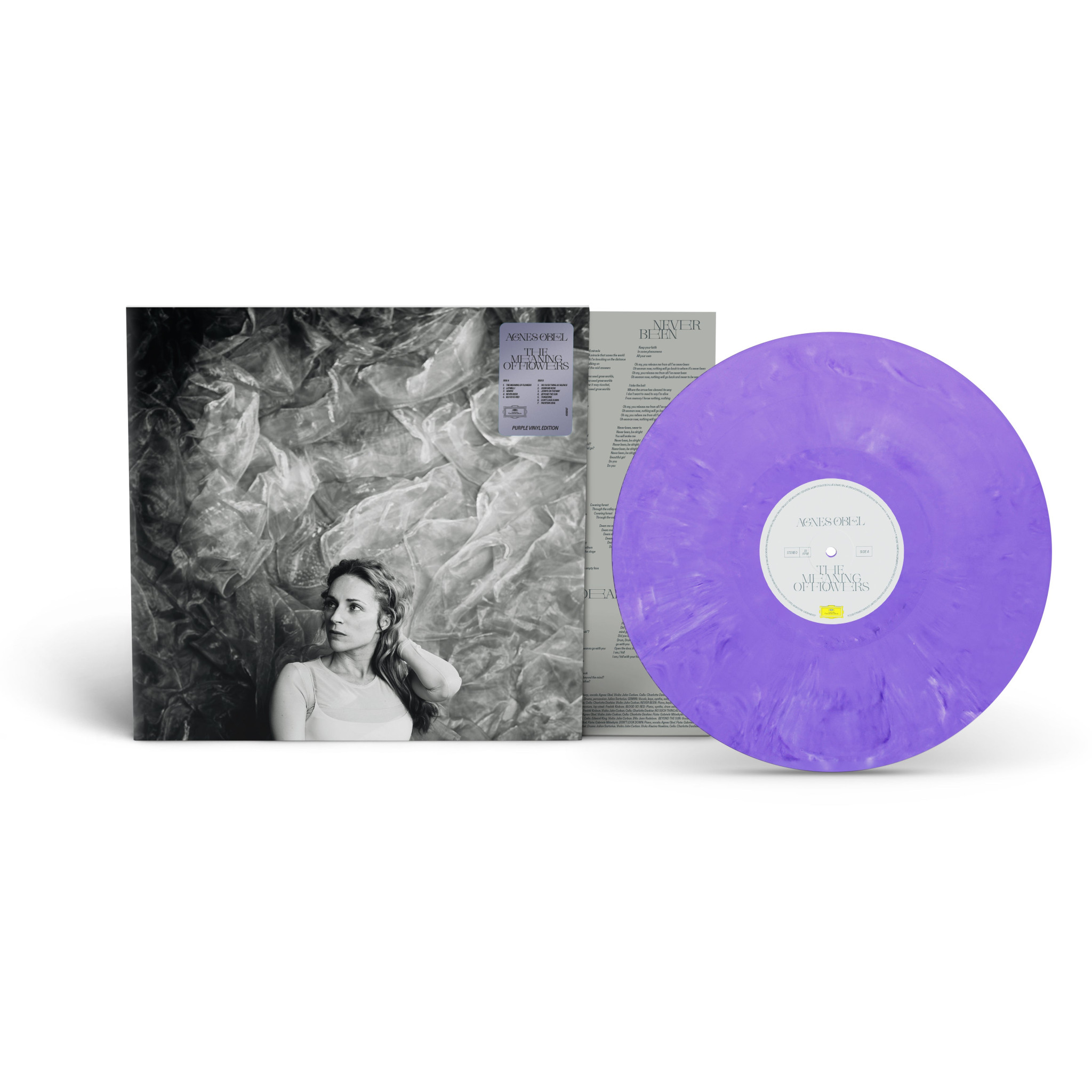
The Meaning of Flowers is out now, available digitally and physically here.
Words by Paul Saullivan